

The Lab
At The Hack Farm we are exploring how digital technologies can play a role in creating sustainable regenerative agroecosystems. In our Farm Lab we do hands-on exploration of technology, developing prototypes to better understand the possibilities and risks.
 There are several technological developments we think can play a role in regenerative agriculture:
- Drones and GIS Cheap drones provide us with new perspectives and ways of following up the land. Geographical information systems give us ways of managing complex systems and getting an overview of the land in our computers, while GPS and RTK allow us to connect reality with the GIS at centimetre accuracy. The farm has its own RTK base station available for correction.
- Digital Manufacturing 3D printers and CNCs provide affordances for designing and manufacturing tools and equipment on site, tailor-made for the specific needs of the farm. Wood and bio-filaments can be part of circular materials systems in the farm. The farm has an H2S 3D printer, a Kuka robot based filament printer and a laser cutter.
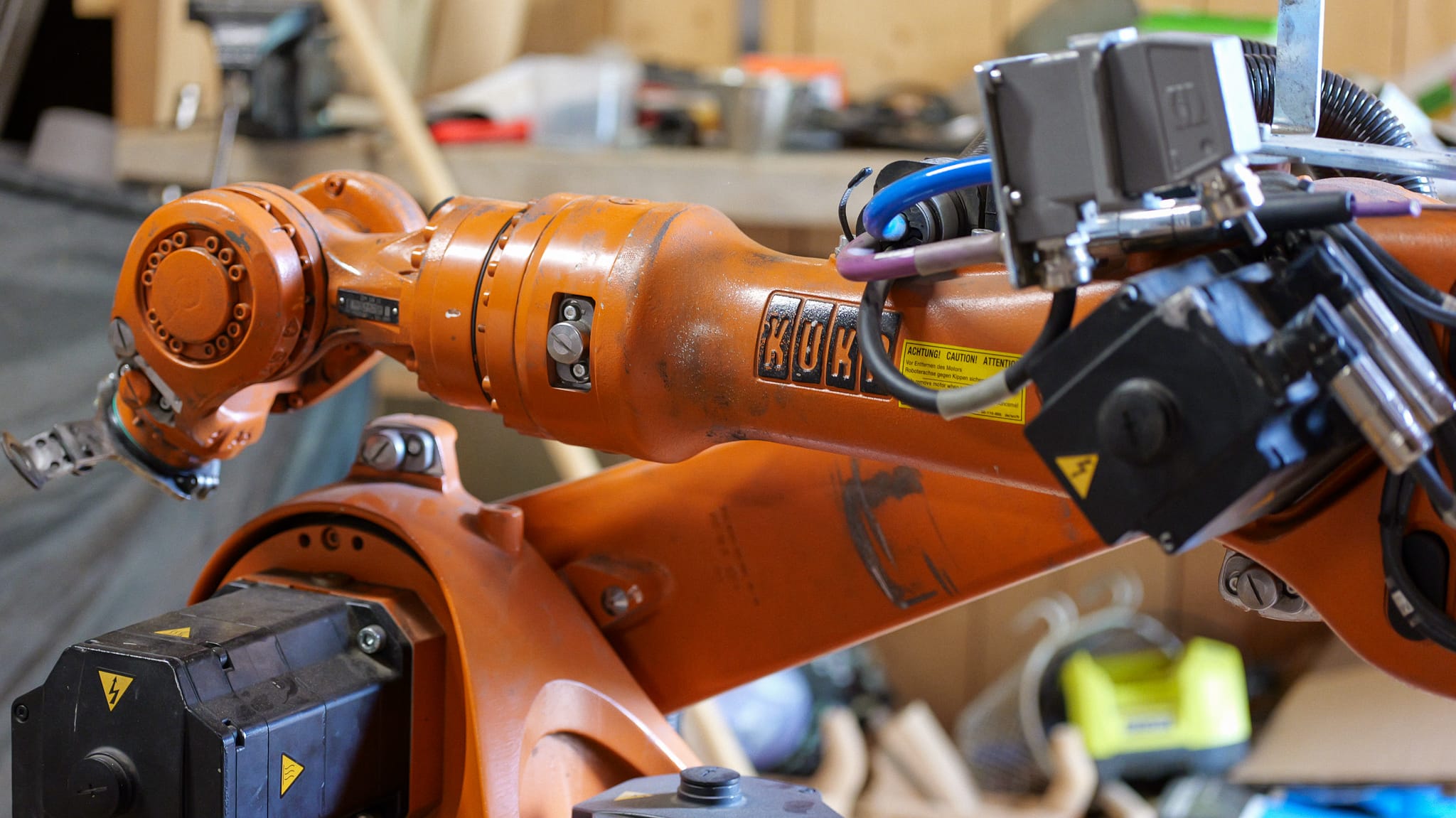
- Robots and automation Machine vision is allowing robots to work with complex heterogeneous systems, making it possible to create automation that is not based on monocultures. This could create opportunities for regenerative practices that may be limited by intensive labour. The farm has two refurbished industrial Kuka robots and some smaller 3D printed robot arms for experimenting.
- IoT sensors Sensors allow us to see and measure for helping us make better decisions. Technologies like LoRa and BLE allow implementing farm sensors with low energy requirements and long distances. Temperature, humidity, soil humidity and EC are well established. But there are opportunities for soil carbon content, biodiversity and more. The farm has a LoRa gateway with a growing set of sensors.
For some of the first results of the lab check Regenerat.io.